What Causes Low Belly Pooch in Women? 7 Real Reasons, and How to Tell Which Is Yours
A lower belly pooch in women is rarely caused by one thing. It usually comes from a mix of hormonal shifts, fat distribution, core and pelvic floor changes, posture, and digestion. That is why the same flat-stomach advice does not work for everyone, and why crunches and cutting calories often fail to budge it.
If you have lost weight elsewhere but your lower belly stays soft or rounded, you are not doing anything wrong. The lower abdomen responds to signals that ab workouts cannot reach: estrogen and insulin, cortisol, the strength of your deep core muscles, the position of your pelvis, and what is happening in your gut.
This guide walks through the seven most common causes of a lower belly pooch in women, explains why it can resist diet and exercise, and gives you a practical way to tell which cause is most likely driving yours. Knowing the why is what makes the next step actually work.
Not sure what is driving your lower belly pooch? Take Parsley Health’s free symptom quiz to get a snapshot of what may be behind your symptoms, and what to do next.
What is a lower belly pooch, exactly?
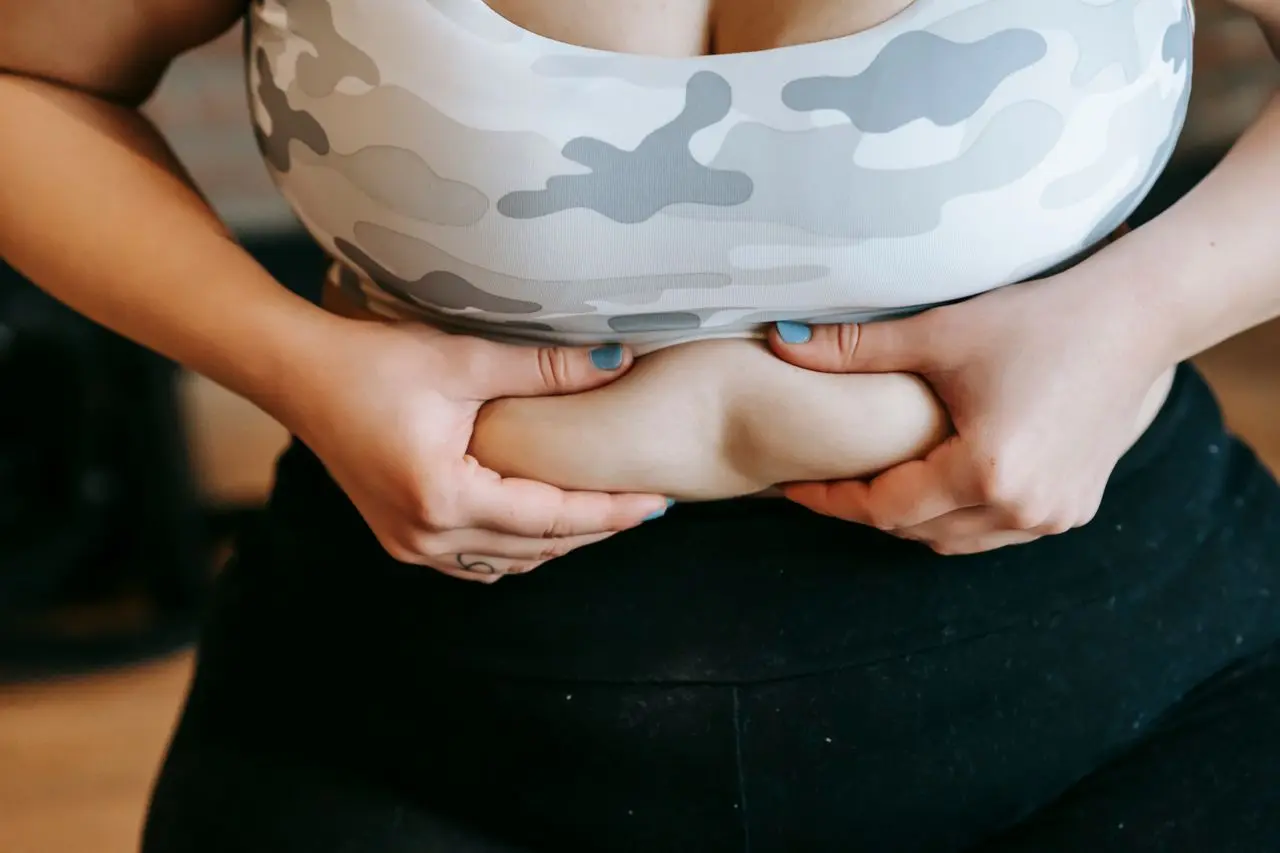
A lower belly pooch is fullness or a soft rounding in the area below the belly button that can persist even at a healthy weight. It is not always excess fat. Depending on the person, it can be subcutaneous fat, deeper visceral fat, weakened or separated core muscles, a forward-tilted pelvis, or simple abdominal distension from bloating.
Subcutaneous fat sits just under the skin and is the soft, pinchable layer. The lower belly is a preferential storage site for it in women, which is partly why this area can stay full even as you lean out elsewhere.
Visceral fat sits deeper, wrapped around the organs. It is more metabolically active, meaning it releases inflammatory signals that affect insulin and overall health, and it tends to increase with age and hormonal change.
The reason this distinction matters is that each underlying cause responds to a different approach. Fat responds to overall metabolic and hormonal changes. A weak or separated core responds to specific rebuilding work. Bloating responds to changes in gut health. Figuring out which layer is involved is the first real step.
It also helps to know that the lower belly is biologically primed to hold on. Fat cells in the lower abdomen have a higher density of receptors that favor fat storage over release, which is one reason this area is often the first to fill and the last to flatten. Add in the hormonal shifts that come with cycles, pregnancy, and menopause, and the lower belly becomes a kind of meeting point for several different drivers at once. For many women, inflammation that contributes to weight gain sits underneath all of it, quietly making the area harder to change.
Curious what is happening beneath the surface? Hormones like insulin, cortisol, and estrogen shape where your body stores fat long before you can see it. Parsley’s advanced lab testing looks at these markers together, so you can stop guessing and see what is actually driving the change.
Finally feel like yourself again
Join 89% of Parsley members who improve or eliminate their symptoms within the first year of care.
Most lower belly pooches trace back to one or more of these seven causes. Many women have more than one at the same time, which is part of why the problem feels so stubborn.
1. Hormonal shifts, especially declining estrogen
Estrogen helps direct where the body stores fat. In the reproductive years, it tends to steer fat toward the hips and thighs. As estrogen declines during perimenopause and menopause, that pattern breaks down and fat shifts toward the abdomen. This is one of the most common reasons a lower belly pooch appears in midlife, even without weight gain. If you are noticing other changes too, it helps to understand the difference between perimenopause and menopause and how each affects the body.
2. Insulin resistance and blood sugar swings
Insulin is the hormone that moves sugar out of your blood and into cells. When cells stop responding to it efficiently, a state called insulin resistance, the body tends to store more fat in the abdomen and finds it harder to release it. Blood sugar that spikes and crashes through the day also drives cravings and fat storage. This is a common and often overlooked driver of lower belly fat, including in women who are not overweight.
3. Chronic stress and cortisol
Cortisol, the main stress hormone, signals the body to store fat centrally when it stays elevated for long stretches. Ongoing stress, poor sleep, and overtraining can all keep cortisol high. The result is sometimes described as a cortisol belly, and learning to lower cortisol naturally is often part of the fix.
4. Diastasis recti and a weakened core
Diastasis recti is a separation of the large abdominal muscles along the midline, most often after pregnancy. When these muscles separate or stay weak, the abdominal wall cannot hold everything in firmly, so the lower belly protrudes even when a woman is fit and at a stable weight. Many postpartum pooches are structural in this way, which is why traditional crunches can make them look worse rather than better.
You can do a rough self-check by lying on your back, knees bent, and lifting your head slightly while pressing your fingers gently along the midline above and below your belly button. A gap wider than about two fingers, or a ridge that pushes up when you engage, can suggest separation worth having assessed. This is common and often improvable, but it usually responds to targeted core rebuilding rather than more intense ab work.
5. Pelvic floor weakness and posture
The deep core and pelvic floor work together as a pressure system that supports your organs and abdominal wall. When the pelvic floor is weak or not coordinating well, or when the pelvis tilts forward (a common posture pattern called anterior pelvic tilt from sitting all day), the lower belly can push outward. In these cases the pooch is about muscle coordination and alignment, not fat, which is why diet barely changes it.
6. Bloating and gut issues
Not every pooch is fat or muscle. Sometimes it is distension from gas, water retention, or sluggish digestion. If your lower belly is flatter in the morning and fuller as the day goes on, chronic bloating may be a major contributor. Food sensitivities, an imbalanced gut microbiome, and constipation can all leave the lower abdomen looking and feeling full, and reducing bloating can visibly change the area.
7. Genetics and natural fat distribution
Genetics influence where your body stores fat and how your abdominal wall is shaped. Some women are simply more prone to lower abdominal storage, even at a low body weight and with consistent training. This does not mean nothing can change, but it does mean the goal is working with your biology rather than fighting it.
There is strong genetic predisposition to abdominal fat storage, independent of overall body weight. The heritability of waist-to-hip ratio (WHR) — the best-studied surrogate for regional fat distribution — reaches up to ~60% even after adjusting for BMI.
Why won’t my lower belly pooch go away with diet and exercise?
Your lower belly pooch may not respond to diet and exercise because spot reduction is not how fat loss works, and because several common causes are not fat at all. You cannot choose where your body loses fat, so the lower belly is often the last place to change even when everything else does.
On top of that, if the real driver is a separated core, a forward-tilted pelvis, a hormonal shift, or bloating, then cutting more calories and doing more crunches addresses the wrong problem. Restricting harder can even raise stress and cortisol, which works against you.
This is the key reframe: a stubborn lower belly is usually a signal, not a willpower problem. It points to something specific in your hormones, your core, or your gut that is worth identifying. A root-cause approach to weight and body composition tends to work better than another round of the same advice.
How to tell what is causing your lower belly pooch
You can often narrow down the cause by noticing when the pooch appears, how it feels, and what else is going on in your body. Use these patterns as a starting point, not a diagnosis.
It may be hormonal if: the change came on around perimenopause or menopause, you have irregular cycles, or you also notice fatigue, mood changes, or shifting fat from hips to midsection. Estrogen dominance and PCOS are also worth ruling in or out.
It may be blood sugar or insulin related if: you get strong sugar or carb cravings, energy crashes in the afternoon, or fat concentrates around the middle even with a reasonable diet.
It may be cortisol related if: you are under sustained stress, sleep poorly, or notice the pooch worsened during a high-stress period.
It may be structural (core or pelvic floor) if: the pooch appeared or worsened after pregnancy, you can feel or see a ridge down the midline when you sit up, or you have bladder leaks or low back discomfort.
It may be gut related if: your belly is flat in the morning and distended by evening, you feel heavy and bloated after meals, or you have gas, irregularity, or known food sensitivities.
Because these often overlap, the most reliable way to know what is actually happening is to look at objective markers rather than guess. Hormone levels, fasting insulin and blood sugar, cortisol patterns, and thyroid function can reveal which drivers are in play.
Want to know which cause is actually yours? Instead of guessing, comprehensive lab testing through Parsley can show whether hormones, insulin, cortisol, or thyroid are contributing, so your plan targets the real driver rather than a generic one.
How to get rid of lower belly pooch, by cause
The most effective way to reduce a lower belly pooch is to match your approach to its cause. Here is how the strategies differ, though most women benefit from a combination.
Balance blood sugar and insulin
Stabilizing blood sugar is one of the highest-leverage changes for abdominal fat. Prioritize protein and fiber, build meals around whole foods, and limit refined carbs and sugary drinks. A hormone-balancing way of eating supports this naturally, and reducing the blood sugar swings tends to ease cravings as well.
Lower chronic stress
Bringing cortisol down takes pressure off central fat storage. Protect your sleep, and build in genuine recovery through breathing, time outdoors, or gentle movement. Simple vagus nerve exercises can help shift your body out of a constant stress state.
Rebuild the deep core (carefully)
If diastasis recti or core weakness is involved, the goal is deep core and pelvic floor reconnection rather than crunches, which can increase pressure on a separated abdominal wall. Movements that engage the transverse abdominis, along with breath work, are usually more effective. A pelvic floor physical therapist can be valuable here, especially postpartum.
Support your gut
If bloating is the main issue, improving digestion changes the look of the lower belly faster than fat loss would. Identifying food triggers, supporting a healthy microbiome, and addressing gut imbalances like dysbiosis can flatten distension and ease the heaviness many women describe.
Move in ways that help hormones
Strength training builds muscle that improves insulin sensitivity and resting metabolism, while overly intense or excessive cardio can raise cortisol for some women. Understanding how exercise interacts with your hormones helps you train in a way that supports rather than fights your goals.
Address hormones at the source
When the driver is hormonal, lifestyle changes work best alongside a clear picture of your hormone levels. For midlife changes in particular, a menopause and perimenopause protocol built around your labs is more effective than generic belly-fat advice. Targeted support, such as a metabolic support bundle, can complement these changes, though it works best as part of a fuller plan rather than on its own.
When to see a doctor about lower belly pooch
It is worth talking to a clinician when your lower belly pooch will not budge despite consistent effort, when it came with other symptoms like fatigue, irregular cycles, mood changes, or digestive issues, or when you suspect a hormonal or metabolic cause you cannot address on your own. These are exactly the connected, whole-body patterns that benefit from a deeper look.
Conventional visits often treat one symptom at a time. A root-cause approach instead asks what is linking them. That is how Parsley Health works: board-certified clinicians and health coaches who investigate the underlying drivers, including hormonal imbalances, gut health, and menopause and perimenopause, using advanced testing to build an individualized plan with you. See if root-cause care is right for you.
Your lab results, explained
Talk to a board-certified clinician for clear answers and personalized guidance around your recent lab test results.
What is the difference between a hormonal belly and a lower belly pooch?
A hormonal belly is a lower belly pooch driven specifically by hormonal changes, such as declining estrogen, insulin resistance, high cortisol, or thyroid issues. A lower belly pooch is the broader term and can also come from core weakness, posture, or bloating. If you suspect hormones, our guide on how to get rid of a hormonal belly goes deeper.
Can you get rid of lower belly pooch without losing weight?
Sometimes, yes. If the pooch is caused by bloating, posture, or core weakness rather than fat, addressing those directly can flatten it without weight loss. If it is mostly fat, improving insulin sensitivity and lowering cortisol can shift fat loss toward the abdomen over time, even with modest changes on the scale.
Why do I have a lower belly pooch even though I am skinny?
A pooch at a low body weight is usually structural or digestive rather than fat-related. Common reasons include diastasis recti, a forward-tilted pelvis, weak deep core muscles, or bloating. These respond to core rebuilding, posture work, and gut support rather than further dieting.
Does menopause cause lower belly fat?
Menopause commonly contributes to lower belly fat. As estrogen declines, fat tends to redistribute from the hips and thighs to the abdomen, increasing both subcutaneous and visceral fat. This shift can happen even without a weight change, which is why many women notice it in midlife.
Is a lower belly pooch normal in women?
A small lower belly pooch is very normal and common in women. The lower abdomen naturally stores subcutaneous fat, and the area is shaped by the pelvis, core muscles, and digestion. A pooch is only worth investigating if it is new, persistent despite a healthy routine, or accompanied by other symptoms.
A note on individual health: Every woman’s body, hormones, and history are different, and this article is educational rather than medical advice. For guidance tailored to your situation, work with a licensed clinician who can look at your full picture. Menopause-protocol
Editorial Standards
At Parsley Health, we believe better health starts with trusted information. Our content is accurate, accessible, and compassionate—rooted in evidence-based research and reviewed by qualified medical professionals. For more details read about our editorial process.
Your symptoms have a root cause. We'll uncover it, together.