Menopause is a natural life transition but the symptoms that can come with it are often anything but simple. Hot flashes, night sweats, sleep disruption, mood changes, weight shifts, and brain fog can significantly affect daily life, relationships, and overall well-being. For many people, finding effective menopause treatment feels confusing, frustrating, or overwhelming.
Part of the challenge is that menopause looks different for everyone. Hormonal changes interact with factors like stress, metabolic health, inflammation, gut function, and sleep, meaning there’s rarely a one-size-fits-all solution. While conventional menopause treatments may help some symptoms, many people are also interested in natural approaches that support the body more holistically.
The good news is that there are evidence-informed menopause treatments that can provide meaningful relief. When care is personalized and rooted in an understanding of how hormones affect the whole body, it’s often possible to reduce symptoms and improve quality of life during this transition.
In this article, we’ll explore menopause treatment options through a holistic lens with insights from Parsley's Dr. Svetlana Stivi, MD, including natural strategies Parsley Health clinicians often use to support hormone balance and symptom relief. We’ll also explain what a comprehensive menopause care approach can look like and why addressing root causes matters during this stage of life.
What is Menopause?
Menopause is a natural biological transition that marks the end of menstrual cycles and reproductive years. It’s officially diagnosed after someone has gone 12 consecutive months without a menstrual period, typically occurring between the ages of 45 and 55, though timing can vary widely.
Leading up to menopause, the body goes through a transitional phase called perimenopause, during which levels of estrogen and progesterone begin to fluctuate and gradually decline. These hormonal shifts are responsible for many of the symptoms people associate with menopause, including hot flashes, night sweats, sleep disruption, mood changes, and changes in metabolism or weight distribution.
Menopause itself isn’t a disease, but the hormonal changes that accompany it can affect multiple systems in the body. Estrogen and progesterone influence far more than the reproductive system; they play roles in bone density, cardiovascular health, brain function, inflammation, and insulin sensitivity. As these hormones decline, some people experience mild, manageable symptoms, while others find their daily quality of life significantly affected.
It’s also important to understand that menopause is not a single moment in time. It’s a process that unfolds over several years, and symptoms can begin well before periods stop completely and continue afterward. Because of this, effective menopause treatment often focuses not just on symptom management, but on supporting the whole body through this transition.
Understanding what menopause is, and how it affects different aspects of health, creates a foundation for exploring treatment options, including both conventional and natural approaches to symptom relief.
What a holistic approach to menopause care looks like
“When you go to your first medical visit, your Parsley physician will start with an in-depth health history that would include not just your symptoms but also the factors that can affect the symptoms of perimenopause and menopause," says Dr. Stivi.
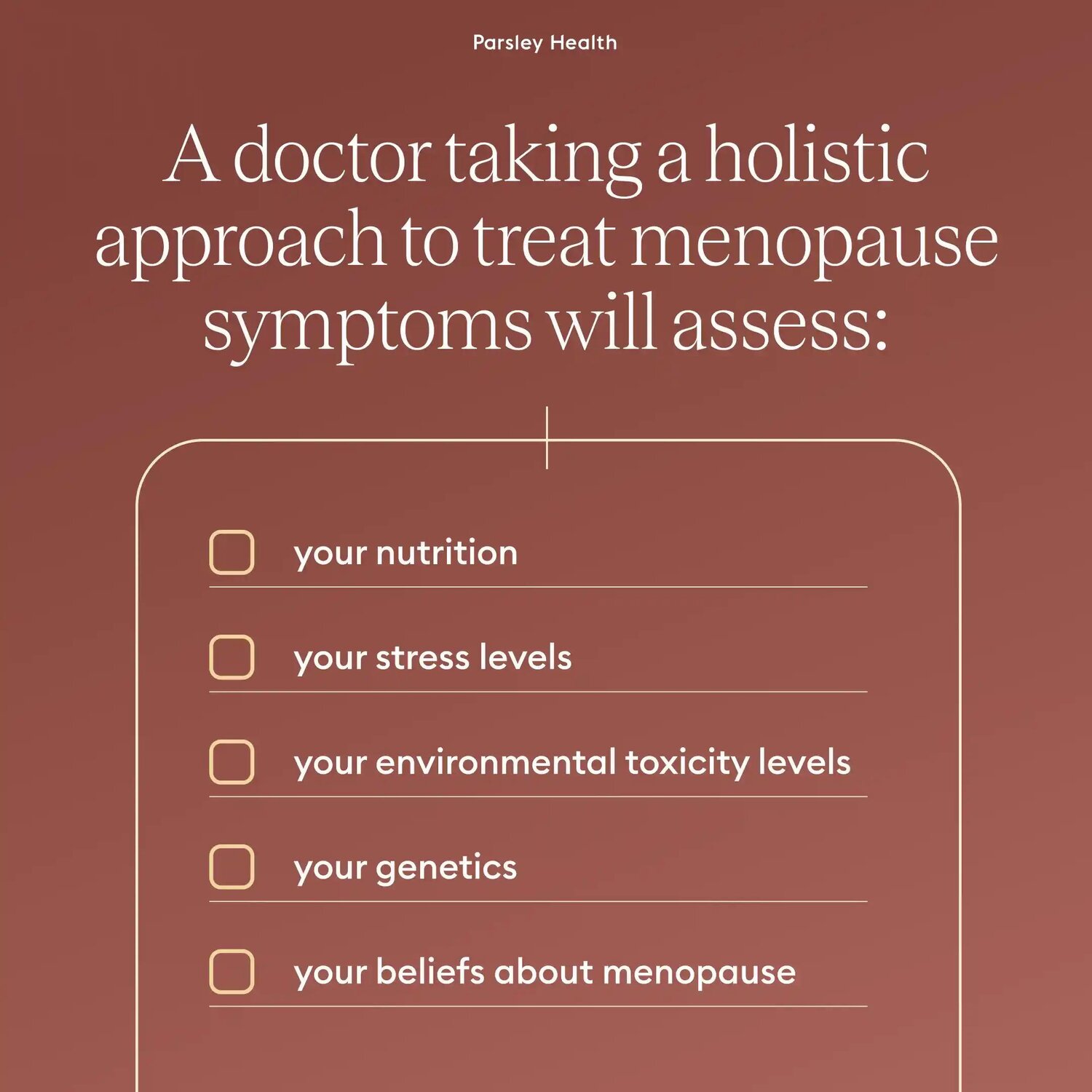 She adds that a doctor taking a holistic approach to treat menopause symptoms will assess:
- your nutrition
- your stress levels
- your environmental toxicity levels
- your genetics
- your beliefs about menopause
From there, a physician can create a customized treatment plan that suits your lifestyle and symptoms.
7 natural menopause treatments that really work
While treatment plans vary from person to person, there are some natural menopause treatments that tend to be successful for most women who try them. At Parsley, our physicians regularly recommend (and see great results) from these seven natural treatment options.
1) Eat foods high in phytoestrogens
Phytoestrogens are naturally occuring parts of plants that mimic the benefits of estrogen in the body. By adding more of these to your diet, you can help manage menopause symptoms related to low estrogen levels.
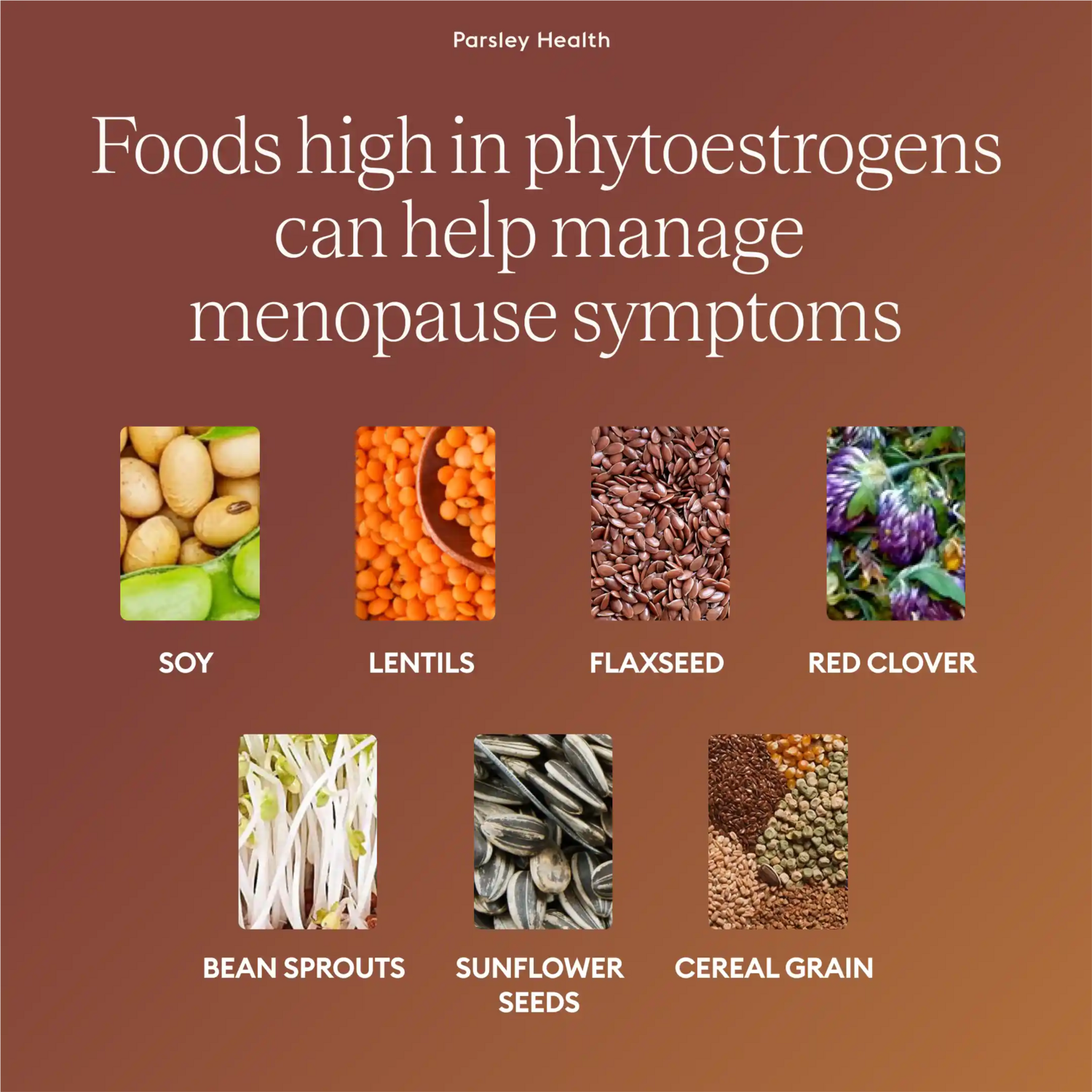 Foods high in phytoestrogens include:
- Soy
- Lentils
- Flaxseed
- Red clover
- Bean sprouts
- Sunflower seeds
- Cereal grain
2) Reduce stress
Stress less is excellent advice for most women going through menopause. In fact, a 2021 study found stressful events make menopause symptoms 21% more severe.
While we can't avoid stress altogether, there are practices we can adopt to respond better to stress and to reduce the stress we can control. These practices include meditation, limiting alcohol intake, and making time for self care, among others.
3) Prioritize sleep
Menopause can cause night sweats and other symptoms that make it hard to sleep. Plus, this period of our lives is riddled with other worries that can keep us up at night, such as caring for aging parents, taking on leadership roles at work and supporting children as they head to university or enter adulthood.
Despite these stressors and symptoms, taking actions to prioritize sleep can reduce menopause symptoms. Solid sleep habits include:
- Following a consistent sleep schedule
- Avoiding those late afternoon or evening naps
- Eliminating or reducing caffeine intake
- Developing a bedtime routine
- Avoiding screen time an hour before sleeping
4) Reduce exposure to environmental toxins
Our environments influence our overall health, including the severity of menopause symptoms. At Parsley, we work with women to avoid environmental toxins that may make symptoms worse.
Common environmental toxins linked to menopause include:
- Microplastics
- Per- and polyfluoroalkyl substances (PFAS) in consumer goods, such as carpets, leather and clothing
- Air pollution
- Polychlorinated biphenyls (PCBs), which are found in older paints and plastics
- Pesticides
- Bisphenol A (BPA), which can be found in plastics and food packaging
- Cigarette smoke
This isn't an exhaustive list, and working with a physician or health coach that takes a holistic view of menopause treatment can help you identify toxins found in your environment.
5) Exercise regularly
Exercising for at least 30 minutes most days of the week has been shown to reduce menopause symptoms. The jury is still out on what types of exercise are best for managing menopause symptoms, though some studies suggest yoga, resistance strength training, and/or tai chi.
Our recommendation? Find the type of exercise that you enjoy and can do consistently.
6) Avoid Sugars and Processed Carbs
Next time you're craving a sweet treat, it may be beneficial to pick up a yogurt parfait with fruit instead of that tub of ice cream. That's because ultra processed foods and sugars have been linked to more severe menopause symptoms.
Conversely, adding more fruits, vegetables and fiber to your diet may reduce menopause symptoms (and lead to better overall health).
7) Addressing menopause beliefs
Women who think menopause is a disease and take their symptoms as a sign of disease will have much more pronounced symptoms than women who think of menopause as a natural state of life.
It's important to note that women aren’t just coming up with this narrative out of nowhere. In our society and our healthcare system, women’s health concerns are often either dismissed or stigmatized, especially when it comes to reproductive health.
At the same time, it’s not uncommon for women's underlying health conditions to be left untreated because doctors dismiss their symptoms as menopause. At Parsley, our closer, more personal look (backed by data) lowers the risk of missed diagnoses.
Our health coaches can also work with women to address any negative beliefs they have around menopause. Alongside working with a health coach, cognitive behavioral therapy (CBT) may also help address menopause misconceptions and reduce symptoms.
Can you give us an example of what natural menopause treatments look like in action?
Dr. Stevi outlines what a natural menopause treatment plan may look like:
“Let’s take an imaginary member, Jane Doe. She’s 51, the average age at which women reach menopause. She’s a professional woman with a full-time job and a family with children, living in New York City. She’s having an array of symptoms, like mood swings, weight gain, bloating, brain fog, breast tenderness, hot flashes, night sweats, insomnia, irritability, anger, fatigue, headaches, decreased libido, vaginal dryness and pain in intercourse. All of these interfere with her daily functioning as a person and as a woman.
"In our first meeting, I will spend an hour doing an in-depth personal health and life history, which will include an assessment of the severity and frequency of her menopause symptoms, how they interfere with her daily life and in what way and to what extent, what has been done before to alleviate symptoms, and what she is doing currently. Normally there isn’t enough time for this, right, since most clinicians spend about 15 minutes with their patients—if that. I’ll also ask her about her past use of medications, herbs, supplements, hormones, and surgeries.
"Then I find out more about what Jane’s average day looks like, starting with what time she gets up, to where she works, what her hours are, if she takes breaks to eat meals and healthy snacks. Does she enjoy her work? Does she hate it? Next, her nutrition. What is that like? Is it homemade or processed? Does she have any allergies or sensitivities? I’ll also ask if there’s any substance use, recreational drug use, and if she uses tobacco, alcohol, and caffeine.
"Then we look at how much time Jane spends relaxing. Does she have time at the end of day for self-care, like an activity she enjoys, quiet time, meditation, walking in nature, or playing with her kids and grandchildren? This feeds into her mental wellbeing. Our feelings about ourselves, our jobs, our families, and our health also affect our stress levels, which in turn can affect our hormonal health. How is Jane’s social life and community? Does she belong to any clubs, or have a religious affiliation? Does she have enough time for friends? Does she have pets?
"We also look at her genetic and medical history, collecting the results of any physical exams, recent gynecological exams, including breast exam, pap smear, mammogram, bone density test. What about her family health history? We factor that in, too.
"There are so many things to find out about just to begin to understand how Jane’s health and lifestyle impact her menopause symptoms. Most of it has to do with how she manages stress, which causes spikes in adrenaline and cortisol, hormones that will interfere with natural fluctuations of estrogen and progesterone, thereby increasing the intensity of her menopause symptoms. With advanced diagnostic testing, we may also discover that she has an underlying condition, like SIBO, that exacerbates her menopause symptoms.It’s all connected! While we call what we do at Parsley holistic medicine, I would simply say that it’s a commonsense medicine.”
You don’t have to just deal with your menopause symptoms.
One in three American women report moderate to severe menopausal symptoms. Even more report that they're suffering silence without treatment. The good news is that doesn't have to be the case moving forward.
“When we look at the body as an integrated system—rather than isolated parts—we’re able to implement the right solution at the right time, which halts the cycle of frustration women experience when they’re stuck in the revolving door of specialist referrals and prescription drugs,” explains Robin Berzin, MD, Parsley's Founder and CEO.
While medications like hormone replacement therapy (HRT) will be prescribed when appropriate, Parsley’s menopause protocol emphasizes advanced testing and personalized lifestyle changes implemented with the guidance of a doctor and personal health coach. With our holistic approach, we take a closer look at every aspect of health impacted by menopause—from metabolic, to mental health, to inflammation—to offer a holistic path to healing that actually works.
This approach has led to 88% of members improving or resolving their menopause symptoms within their first year of membership, and 30% reducing medications related to menopause treatment, our protocol has proven to be life changing for women who might otherwise suffer in silence.
Today, we have formalized our menopause protocol to ensure our providers are officially trained in it so that our menopause care is available to everyone, everywhere.
“We’re rolling out a national program now because we believe every woman should know that hormone replacement therapy (HRT) isn’t her only option,” says Parsley CEO and Founder Dr. Robin Berzin, MD. “Indeed, many don't need HRT (even when it’s prescribed), and many others get prescribed HRT yet don’t receive the proper testing to ensure the dosage is safe.”
Are you or someone you know suffering from menopause symptoms? 88% of Parsley members improve or resolve theirs in their first year of membership. Schedule a free call to find out how we can help you feel better.