Seed Cycling for Hormones: What Is Seed Cycling and What Are The Benefits?
Hormones are influenced by many interconnected factors, including diet, sleep, stress, physical environment, and movement. When one or more of these areas are out of balance, the body’s hormone signaling can be affected. For some people, this may show up as a variety of health issues, such as irregular periods, acne, polycystic ovary syndrome (PCOS), low libido, thyroid disorders, and fatigue.
Seed cycling is based on the idea that certain nutrients found in seeds, such as fiber, healthy fats, and micronutrients, may help support the body’s natural hormone metabolism during different phases of the menstrual cycle. While interest in seed cycling continues to grow, the scientific evidence is still evolving.
Below, we’ll break down what seed cycling is, how it’s typically practiced, and what research currently suggests about its potential role in hormone health, so you can decide whether it’s something worth exploring.
What is seed cycling?
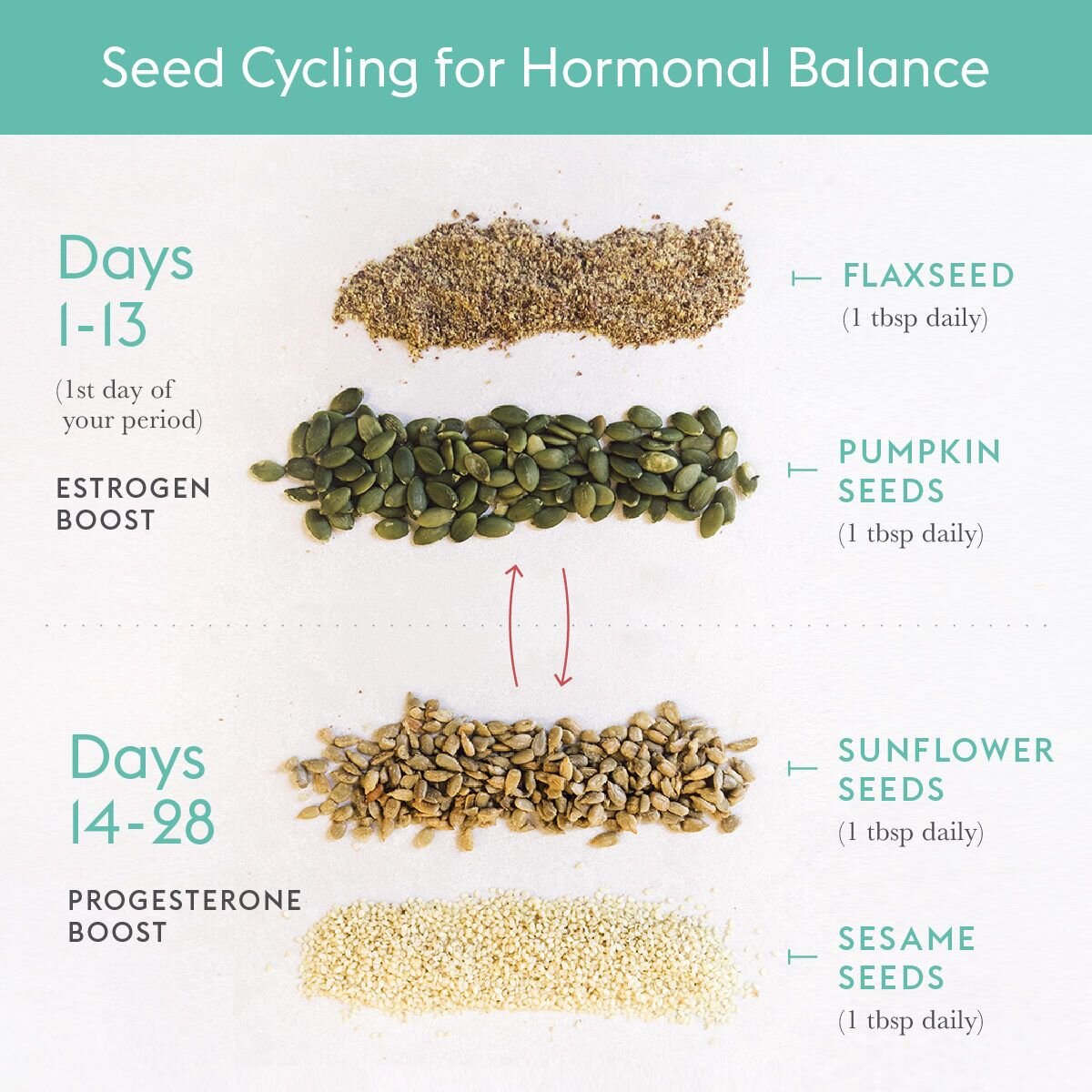
Seed cycling is a protocol that involves rotating certain types of seeds throughout your menstrual cycle. Proponents claim this practice can help regulate menstrual cycles, reduce PMS symptoms, boost fertility, ease menopausal symptoms, and support hormonal balance.
When hormones are balanced, estrogen levels rise during the first half of the menstrual cycle, whereas progesterone levels rise during the second half. When not in this natural rhythm, an imbalance between estrogen and progesterone can occur, which can contribute to menstrual irregularities.
Finally feel like yourself again
Join 89% of Parsley members who improve or eliminate their symptoms within the first year of care.
In truth, little scientific research supports a direct relationship between seed cycling and improved hormonal balance.
While more research is needed on seed cycling specifically, the nutritional properties present in flax, sesame, pumpkin, and sunflower seeds may play an active role in supporting our natural hormonal cycle.
The proposed mechanisms include the following.
Phytoestrogens in flaxseeds may help regulate estrogen levels.
Zinc in pumpkin seeds may support progesterone production.
Lignans in sesame seeds may help balance estrogen.
Vitamin E in sunflower seeds may boost progesterone levels.
Here's what we know through the limited research that exists. A 2023 study of 90 people with PCOS found that seed cycling helped improve the hormonal imbalance that's characteristic of the condition. Specifically, seed cycling was associated with decreased luteinizing hormone (LH) and follicular stimulating hormone (FSH).
Older research shows that flaxseeds help in lengthening the luteal phase of the cycle. This may improve ovulation and reduce common premenstrual symptoms, such as breast pain and cramping.
Animal studies have shown that vitamin E and omega 3- and omega-6 fatty acids (which are found in certain seeds) are essential for hormone production and follicle function.
Specifically, omega-3 fatty acids have been found to directly increase progesterone secretion and enhance uterine blood flow in animals.
Additionally, in mice, zinc helps to improve formation of the corpus luteum, the hormone-secreting structure that is responsible for producing progesterone and that stimulates the uterus to thicken in preparation for potential implantation. Zinc is present in higher concentrations in pumpkin and sesame seeds.
If you’ve tried other methods of balancing hormones without success, seed cycling could be another option. Anecdotally, some people have had success with this protocol in combination with other healthy lifestyle changes. We recommend talking to your doctor first.
Interested in giving it a try? Here’s how.
Days 1-14 of your cycle
1-2 tbsp daily of raw, organic, freshly ground flaxseeds
1-2 tbsp daily of raw, organic, freshly ground pumpkin seeds
Both flax and pumpkin seeds are rich in omega-3 fatty acids, which enhance uterine blood flow and maintain healthy cell membranes.
Flaxseeds contain special properties called lignans which can help to bind excess estrogen in the first phase of the cycle. Pumpkin seeds, high in the trace mineral zinc, support progesterone production and release for the second phase of the cycle.
Days 15-28 of your cycle
1-2 tbsp of raw, organic, freshly ground sunflower seeds
1-2 tbsp of raw, organic, freshly ground sesame seeds
Sesame seeds, which also contain lignans, help to block excess estrogen during this time. Sunflower seeds, high in the trace mineral selenium, assist in the detoxification process of hormones in the liver.
Grinding the seeds increases the surface area for absorption to the essential fatty acids inside. They can easily be blended into smoothies, sprinkled on top of chia seed pudding, mixed into salad dressings, hot cereals, or dairy or non-dairy yogurt parfaits.
Keep a journal to mark your symptoms through your seed cycling experience and work with a doctor or other provider to help support you while you rebalance your hormones.
Editorial Standards
At Parsley Health, we believe better health starts with trusted information. Our content is accurate, accessible, and compassionate—rooted in evidence-based research and reviewed by qualified medical professionals. For more details read about our editorial process.
Your symptoms have a root cause. We'll uncover it, together.



 Does seed cycling work to improve hormone health?